


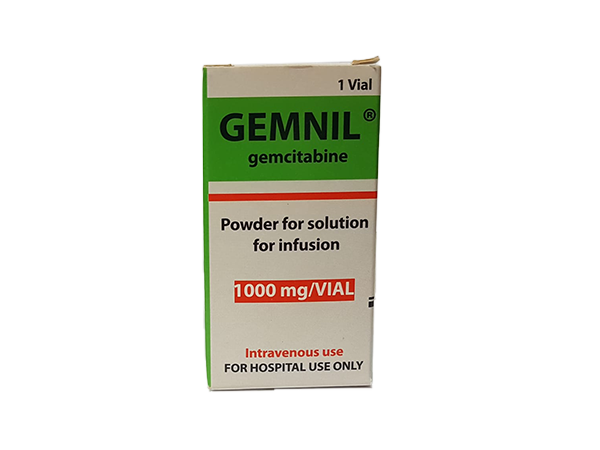
Gemnil 200mg & 1gm injection Vial
Gemcitabine (dFdC), which is a pyrimidine antimetabolite, is metabolized intracellularly by nucleoside kinase to the active diphosphate (dFdCDP) and triphosphate (dFdCTP) nucleosides. The cytotoxic effect of gemcitabine is due to inhibition of DNA synthesis by two mechanisms of action by dFdCDP and dFdCTP. First, dFdCDP inhibits ribonucleotide reductase, which is uniquely responsible for catalyzing the reactions that produce deoxynucleoside triphosphates (dCTP) for DNA synthesis. Inhibition of this enzyme by dFdCDP reduces the concentration of deoxynucleosides in general and, in particular, dCTP. Second, dFdCTP competes with dCTP for incorporation into DNA (self-potentiation).
Share Now
Additional Information
| Name | Gemnil |
| Description | Gemcitabine (dFdC), which is a pyrimidine antimetabolite, is metabolized intracellularly by nucleoside kinase to the active diphosphate (dFdCDP) and triphosphate (dFdCTP) nucleosides. The cytotoxic effect of gemcitabine is due to inhibition of DNA synthesis by two mechanisms of action by dFdCDP and dFdCTP. First, dFdCDP inhibits ribonucleotide reductase, which is uniquely responsible for catalyzing the reactions that produce deoxynucleoside triphosphates (dCTP) for DNA synthesis. Inhibition of this enzyme by dFdCDP reduces the concentration of deoxynucleosides in general and, in particular, dCTP. Second, dFdCTP competes with dCTP for incorporation into DNA (self-potentiation). |
| Active Ingredient | Gemcitabine |
| Indication | Gemcitabine in combination therapy is indicated for the following cancer types:
Locally recurrent or metastatic breast cancer who have relapsed following adjuvant/neoadjuvant chemotherapy. Prior chemotherapy should have included an anthracycline unless clinically contraindicated. |
| Strengths | 200mg & 1gm injection Vial |
| Business Partner | Auromedics |
| Origin | USA |
Related Products
Related products


Disclaimer
Pharma Solution is the marketing agent and Distributor for the listed products for the Gulf and MENA region. The products are either registered and approved by the respective local health authority or contracted by the MAH to supply to the end users on a named patient basis. Some products such as Orphan drugs, rare diseases medicines are imported based on special import permits and as per need of the Hospitals in compliance with full documentation.